
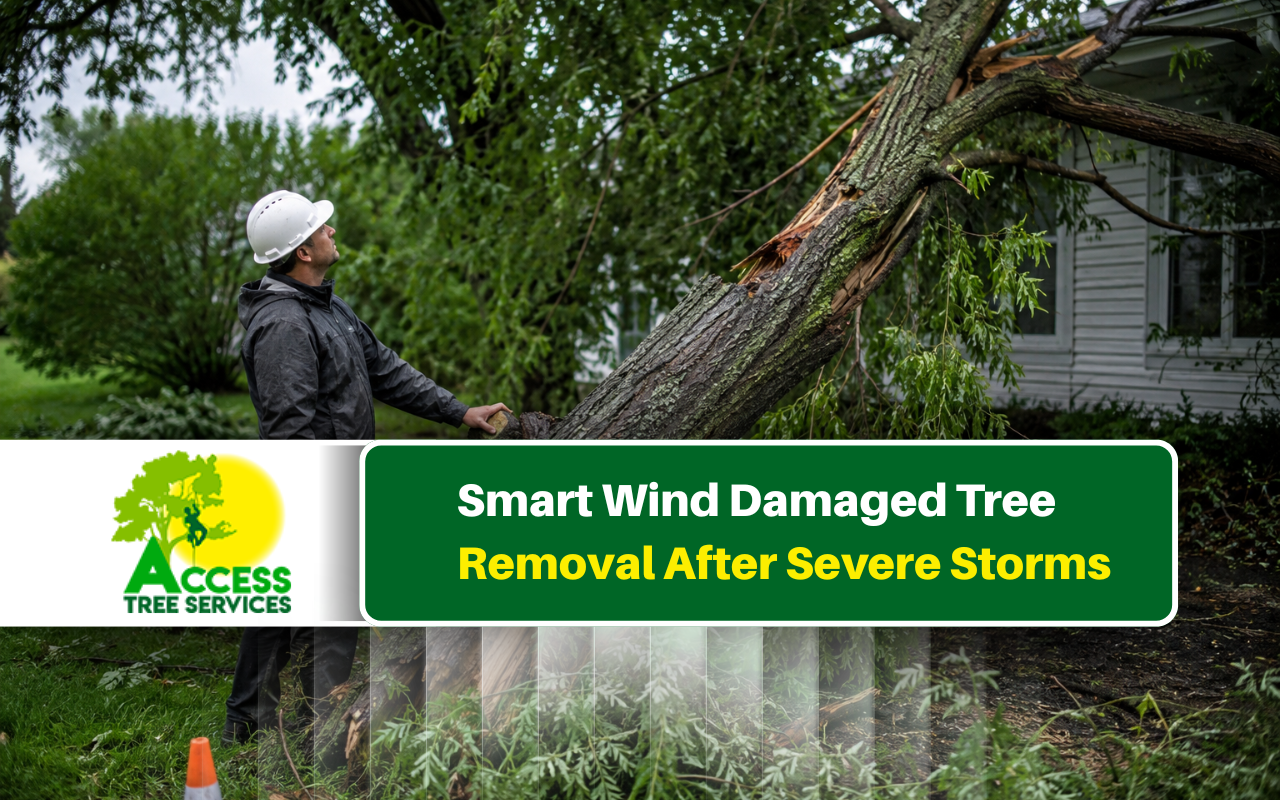
Wind damaged tree removal can feel urgent after a strong storm leaves broken limbs, leaning trunks, and scattered debris across your yard. However, a calm plan helps protect your family, home, and landscape while making cleanup easier.
At Access Tree Services LLC, we guide homeowners through safe next steps after severe weather. This article explains how to inspect damage, reduce risks, manage debris, and know when professional help is safest.
Start With A Careful Yard Damage Inspection
Begin by walking around your property from a safe distance. Look for split trunks, hanging branches, exposed roots, leaning trees, and fresh cracks in the soil. Take photos to document the damage.
Pay close attention to trees near roofs, fences, driveways, and walkways. Also, check areas near slopes or wet ground because loose soil can weaken roots. Our guide to storm season tree preparation can help you spot common warning signs.
Protect People Before Beginning Any Cleanup Work
Safety must come before speed. Keep children, pets, and visitors away from damaged trees. Never stand under a cracked limb, and do not touch branches resting on utility lines. Contact the utility company first when wires are involved.
- Wear gloves, eye protection, sturdy boots, and a hard hat.
- Use tools only on dry, stable ground.
- Keep a charged phone and first-aid kit nearby.
- Stop working if wind or rain returns.
Even simple wind damaged tree removal can become dangerous when branches are under pressure. Therefore, pause when a cut feels uncertain or when the tree shifts unexpectedly.
Handle Small Branches Using Simple Safe Methods
Small fallen branches are often the easiest part of cleanup. Use hand pruners for thin twigs and loppers for thicker pieces. Make clean cuts close to the branch collar, but avoid cutting into the main trunk.
Work in one area at a time and move debris away from paths. Stack branches in a clear zone so they do not become trip hazards. For larger storm cleanup needs, review our storm damage cleanup service.
Recognize Leaning Trees And Hidden Root Problems
A leaning tree may look stable while its roots continue to fail below the soil. Fresh soil lifting around the base, exposed roots, or a new lean after a storm can signal serious movement. Do not pull, push, or tie the tree yourself.
- Watch for widening cracks near the root area.
- Keep vehicles and people outside the fall zone.
- Mark the area so others stay away.
- Call for an inspection when the lean is new.
Our team at Access Tree Services LLC can assess whether support, pruning, or wind damaged tree removal is appropriate. Early action often prevents wider damage to nearby structures and landscaping.
Know When Fallen Trees Require Professional Equipment
Fallen trees can hold hidden tension in limbs and trunks. Cutting the wrong section may cause sudden movement, chainsaw kickback, or rolling wood. Large trees, uprooted trunks, and trees crossing roads should be handled by trained crews.
A professional wind damage tree removal service can manage heavy trunks, unstable limbs, and hidden pressure points with proper rigging, cutting plans, and lifting equipment. For urgent hazards, see our emergency tree removal options and avoid entering the danger area.
Reuse Storm Debris Through Practical Yard Solutions
After safe cutting, separate leaves, small branches, and larger wood. Clean organic debris can often be reused instead of sent to a landfill. This also reduces clutter and may support your garden.
- Turn chipped branches into mulch for planting beds.
- Compost leaves and small untreated twigs.
- Cut suitable logs for future firewood.
- Use local green waste collection when available.
Before moving heavy pieces, check their weight and route. Ask for help when needed, and never lift awkward sections alone. Good disposal planning makes wind damaged tree removal faster and more organized.
Frequently Asked Questions
How Soon Should Storm Damaged Trees Be Checked?
They should be checked as soon as conditions are safe. Immediate inspections are important when trees lean toward buildings, roads, or power lines.
Can I Remove Broken Branches By Myself?
You can usually remove small ground-level branches with hand tools. However, high limbs, heavy wood, and unstable trees require trained help.
What Makes A Damaged Tree An Emergency?
A tree is an emergency when it may fall soon, blocks access, damages a structure, or touches utility lines.
Will A Leaning Tree Recover After Wind?
Some young trees may recover, but a new lean can show root failure. A professional inspection is the safest way to decide.
Who Provides Local Help After Severe Wind?
For a wind damaged tree service in Annapolis, MD, contact a licensed and insured local team with storm response experience.
Restore Your Yard With Confident Professional Support
Once hazards are removed, inspect open spaces, repair damaged soil, and replace lost trees with suitable native species. Mulch and steady watering can help new plants establish stronger roots before the next storm season.
With Access Tree Services LLC, you receive clear guidance for emergency wind tree removal and long-term yard recovery. When you need help, stop by our tree service contact page to request a safe property assessment.