Finding a fallen tree on your home can feel frightening. A calm first step can limit damage and keep everyone safer. Our guide explains tree on roof removal in clear terms, so you know what to check and when to call trained help.
At Access Tree Services LLC, we understand how quickly this problem can change. A heavy limb may shift, crack shingles, or open the roof to rain. Therefore, careful planning matters from the first look to cleanup.
Begin With a Safe Ground-Level Roof Damage Check
Begin from a safe spot on the ground. Look for broken branches, roof dips, loose gutters, cracked shingles, or pieces hanging over doors and walkways. Never stand under the tree, and do not climb onto a wet or damaged roof.
Next, check the attic from inside when safe. Water stains, daylight through boards, or broken framing can show deeper damage. Take clear photos, since they may support repairs or an insurance claim.
- Keep people and pets away from the area.
- Watch for moving limbs or falling roof material.
- Call emergency services if power lines are involved.
Know When the Situation Needs Immediate Professional Help
Some tree on roof removal jobs are too dangerous for home tools. Call trained professionals when the trunk is large, the roof is sagging, branches touch power lines, or the tree keeps moving. Fast action matters for emergency roof tree removal in Annapolis, MD.
Our team at Access Tree Services LLC can assess the tree, plan safe cuts, and reduce pressure on the structure. We use controlled methods to help prevent more roof damage while protecting people, vehicles, and property.
Why Small DIY Cuts Can Create Bigger Risks
A small branch may look easy to remove, yet cutting it can change the balance of the tree. One wrong cut may cause a heavy section to roll, slide, or fall through the roof. Therefore, tree removal from roof work should stay limited to ground debris.
Homeowners should avoid chainsaws, ladders, and ropes near a damaged roof. Instead, block the area and wait for trained support. This lowers the chance of falls, cuts, shock, and added damage.
- Do not pull branches with a vehicle.
- Do not cut wood resting under pressure.
- Do not walk on cracked or soft roof areas.
Professional Tree Removal Protects Roofs During Every Step
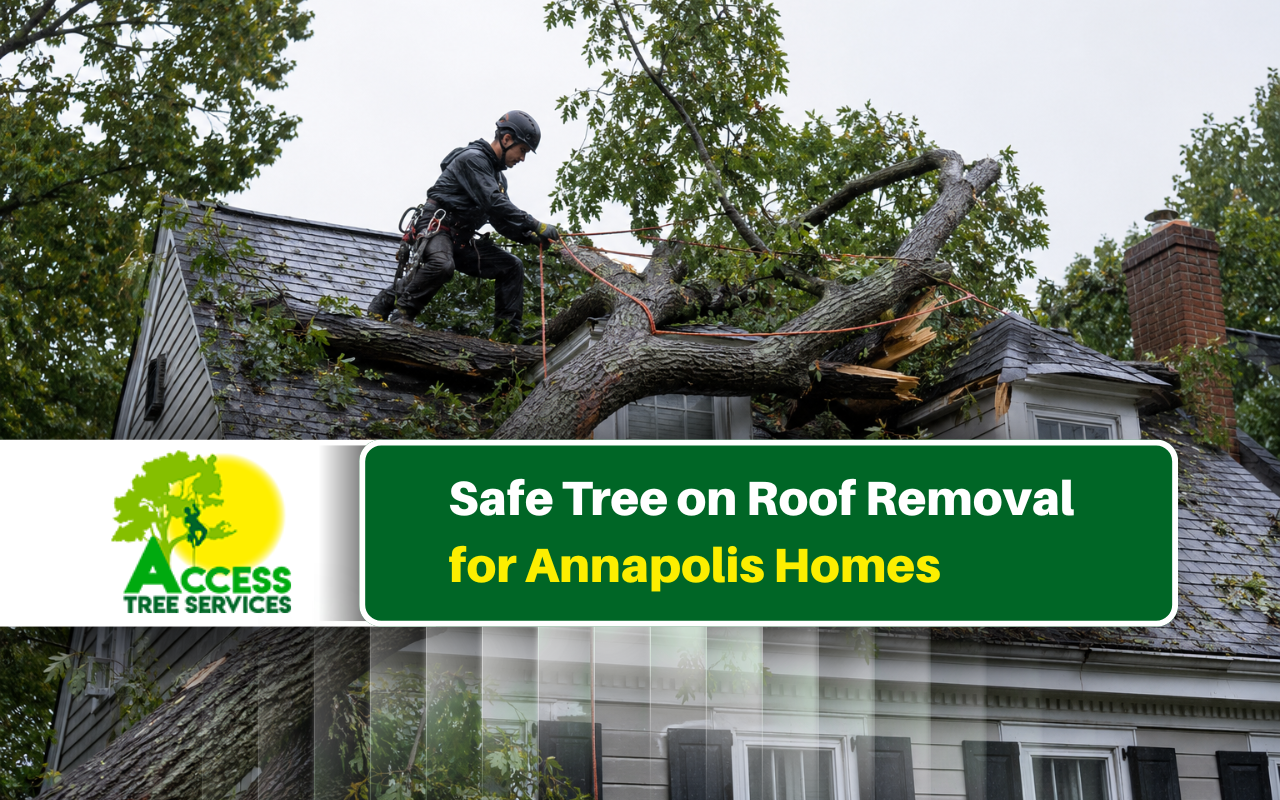
Professional tree on roof removal starts with a clear view of weight, angle, and nearby hazards. Crews may use ropes, rigging, lifts, or cranes to control each section. This process keeps large pieces from dropping onto weak areas.
For urgent help, review our emergency tree removal service. We can also explain how storm damage tree removal supports safer cleanup after severe weather.
Roof Inspection and Insurance Steps Following Safe Removal
After tree on roof removal, the roof needs a full check. Look for holes, bent flashing, broken gutters, wet insulation, and damaged wood. A roofing professional can confirm whether the structure is safe and what repairs should happen first.
Also, save photos, reports, and service records. Our Maryland tree insurance claims guide can help organize the next steps. Clear records make insurer conversations easier.
Clean Debris Carefully and Prevent Added Property Damage
After tree on house removal, cleanup should stay organized. Separate branches, logs, leaves, and roof material. Keep sharp pieces away from driveways and walkways, and avoid dragging wood across siding, fences, or garden areas.
At Access Tree Services LLC, we include cleanup in safe service. The goal is to leave the area ready for inspection and repair.
- Move small debris into safe piles.
- Keep damaged roofing separate from yard waste.
- Leave heavy logs for proper equipment.
Frequently Asked Questions
Can I remove a small branch myself?
You may move light debris that is already on the ground. However, avoid cutting or pulling anything still resting on the roof, because its weight may shift without warning.
How fast should I call for help?
Call as soon as the area is secure. Quick support can reduce leaks, roof stress, and falling limbs.
Will the roof need repairs afterward?
Often, yes. Even small damage may require inspection of shingles, flashing, decking, or framing.
Should I contact my insurance company first?
Secure the area and arrange urgent safety help first. Then contact your insurer and share photos, reports, and service details.
How can I prevent another roof impact?
Schedule regular pruning, remove weak limbs, and check trees after storms. Healthy trees are less likely to break near your home.
Plan Reliable Tree Care Before the Next Storm
Regular care lowers the chance of another emergency. Watch for dead branches, leaning trunks, cracked limbs, or roots lifting from the soil. Early action is safer than urgent tree on roof removal after severe weather.
With Access Tree Services LLC, you can get clear guidance before a risky tree becomes a larger problem. Use our contact page for tree service support to discuss concerns and plan a safe next step.