
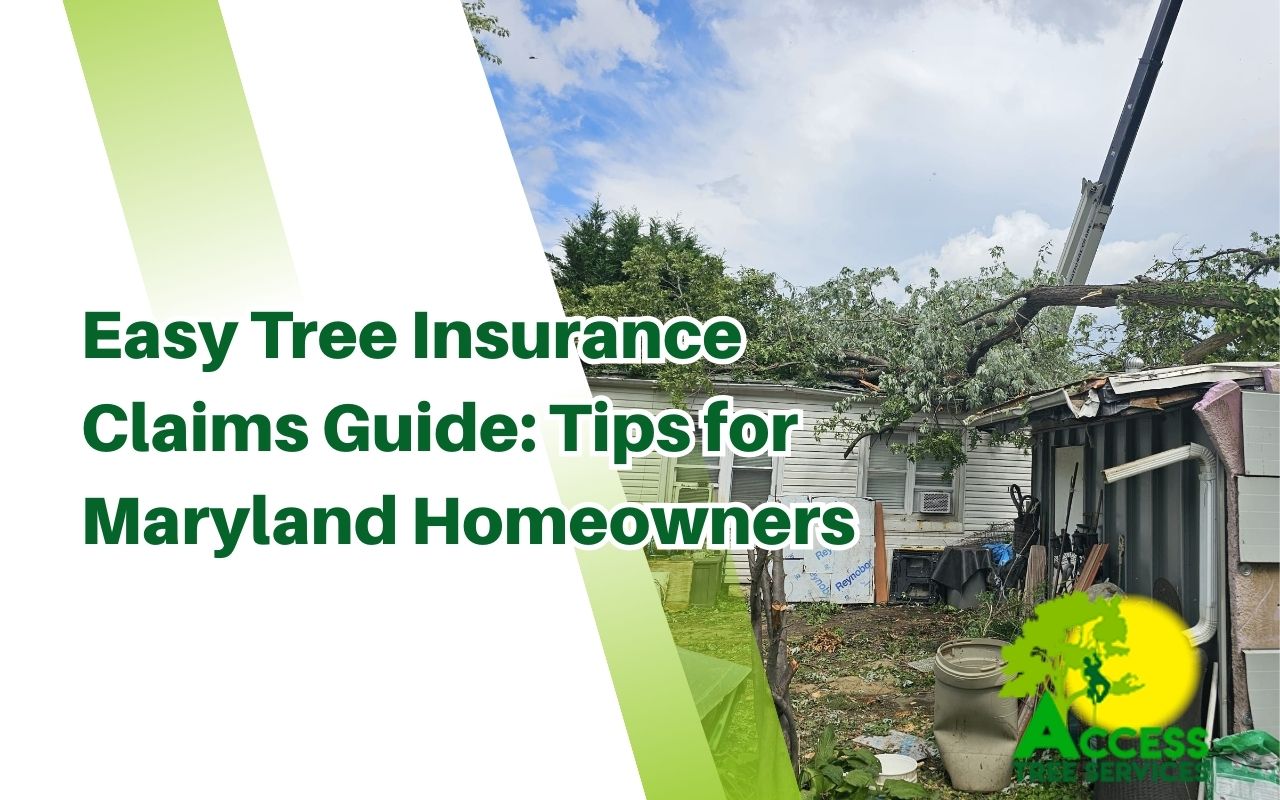
This Tree Insurance Claims Guide in Maryland helps you act fast after a storm. For example, a tree may hit your roof. Sometimes, it is your tree. Other times, it is a neighbor’s tree. Either way, the next steps matter.
Access Tree Services LLC can help you stay safe while you plan the claim. Moreover, you can avoid delays when you know deductibles, exclusions, and emergency rules. As a result, you can protect your home with less stress.
Tree Insurance Claims Guide in Maryland: Policy Basics
Homeowners insurance in Maryland often covers storm damage, fire, and vandalism. Therefore, a fallen tree may qualify when it damages your home or a covered structure. However, each policy has limits, so you should review your contract closely.
Also, your deductible is what you pay first before coverage applies. Higher deductibles can lower premiums. Still, they can raise your out-of-pocket cost during a claim. Because of that, it helps to review your policy before storms arrive.
Coverage for Tree Damage
Most policies cover removal and repairs when a tree hits your home, garage, or other covered structure. However, many insurers set caps for debris cleanup and tree removal. So, knowing your limits helps you plan ahead.
Meanwhile, policy exclusions in Maryland can block coverage in specific cases. For instance, damage to certain items may not qualify. Review your documents so you know what is included and what is excluded.
- Damage to the home or an attached structure is often covered.
- Cleanup and removal may be limited by a policy cap.
- Some fences, shrubs, driveways, or detached sheds may be excluded.
- Neglect, poor maintenance, or tree health issues may affect coverage.
Tree Insurance Claims Guide in Maryland: Neighbor Trees and Liability
When a neighbor’s tree falls during a storm, your homeowners insurance often handles your damage first. However, liability can change if the tree was dead or clearly unsafe. Therefore, notes, messages, and prior warnings can matter.
Still, avoid arguments. Instead, tell your insurer what happened and share your evidence. Next, your insurer may pursue reimbursement through subrogation, which can reduce conflict while the insurers handle the details.
Assess Damage Safely on Your Property
First, check for roof, siding, window, and gutter damage from a safe distance. Also, watch for hanging limbs. They can fall without warning. If you see a live wire or major structural risk, leave the area.
Next, write down every damaged spot. Include secondary issues like leaks, loose shingles, and shifted siding. This organized record supports your claim and helps contractors estimate repairs more accurately.
Tree Insurance Claims Guide in Maryland: Photo Checklist That Works
A photo checklist strengthens your claim because it shows clear evidence. Take wide shots for context. Then take close-ups for detail. Also, capture the fallen trunk, broken limbs, and debris patterns before any cleanup begins.
Moreover, keep images organized by location, such as roof, siding, yard, and windows. Save them to cloud storage right away. As a result, you can share a clean file set with your adjuster.
- Wide shots of the full scene from several angles.
- Close-ups of impact points, cracks, and punctures.
- Photos of blocked access areas and unsafe hanging limbs.
- Images of temporary protection, like tarps or boards.
How to File a Tree Damage Claim
Report the loss quickly. Many insurers accept claims online or by phone. Provide your policy number, date of loss, and a brief summary. Then ask what documents they want, so you avoid delays.
After that, keep receipts for urgent steps like temporary protection and safe debris control. Also, track every call and email. Finally, review the settlement carefully, since the deductible applies to covered repairs.
- Start the claim and request a claim number.
- Share your photo checklist and damage notes.
- Schedule the adjuster visit and attend the walkthrough.
- Submit contractor estimates and all receipts.
- Confirm the scope, exclusions, and deductible impact.
Working With an Insurance Adjuster
When the adjuster arrives, walk through damage areas in a calm order. Use your photos to show what changed since the storm. Also, share estimates from reputable contractors. This clarity can reduce back-and-forth questions.
Keep notes with dates, names, and key decisions. If the adjuster requests changes, ask for the reason in writing. Therefore, you can match the final scope with what you actually need to repair.
Frequently Asked Questions
Does homeowners insurance cover tree removal in Maryland?
Often, yes, when the tree damages a covered structure. However, many policies set a cap. Also, exclusions can apply, so review your policy carefully.
What if a neighbor’s tree falls on my house?
Usually, your insurer starts the claim on your policy. Still, if the neighbor ignored a clear hazard, subrogation may apply. Document any prior warnings when possible.
How does the deductible affect my settlement?
The deductible is subtracted from covered costs. Therefore, smaller losses may not be worth filing. Keep receipts and confirm how your insurer applies the deductible.
What should I do first after storm damage?
Focus on safety, then document everything. In this Tree Insurance Claims Guide in Maryland, the photo checklist is a key step because it supports your timeline and scope.
How do I choose a reliable emergency tree contractor?
Look for licensed, insured, and well-reviewed teams. Access Tree Services LLC can provide safe, documented work that supports your claim. Also, ask for written estimates and clear cleanup details.
Emergency Tree Removal and Next Steps
If you search “emergency tree removal near me,” choose a contractor with proper insurance and safety gear. Access Tree Services LLC can help reduce risk, especially when limbs are unstable or blocking access. Moreover, a documented removal can support your claim file.
Also, explore local service details before you hire help. For example, you can review tree removal in Baltimore, MD or tree removal in Bowie, MD. Additionally, see the full range of tree services in Maryland to match your needs.
- Confirm the crew is licensed, bonded, and insured.
- Ask whether debris hauling is included in writing.
- Request removal photos and a brief job summary for insurance.
- Choose a team that prioritizes safety and fast response.
Finally, if you need quick support after a storm, contact Access Tree Services LLC through the contact page. Use this Tree Insurance Claims Guide in Maryland to stay ready, even before the next storm hits.
Keep Your Thatch Roof Safe in Florida with Fire Retardant
Fire Retardant for Thatch Roofs in Florida helps protect tiki huts and rustic roofs from sudden fire. Sunshine Tiki Hut Corp supports safer outdoor spaces across Florida.
Florida can bring dry spells and electrical storms. So, strong protection matters. NFPA rules guide owners to act early. As a result, you can keep the tropical look and still feel calm.
Why Fire Retardant for Thatch Roofs in Florida Matters
Florida’s warm weather makes thatch roofs popular. However, dry palm leaves can ignite fast. Thatch fire safety matters because one spark can spread across the roof.
To reduce risk, many owners add protective treatments. These steps help preserve the classic style while improving safety.
- Lower the chance of quick ignition.
- Slow flame spread across the roof surface.
- Support safer gathering spaces for guests and families.
Understanding the Risk Factors for Thatch Roofs
Thatch roofs use dried grasses, reeds, or palm fronds. This texture can trap embers. Wind can carry sparks from grills or outdoor lighting. Lightning is also a concern during storms.
Older thatch dries out more. Nests and debris can add fuel. Therefore, routine checks help reduce hidden hazards.
- Wind-blown embers from grills or fire pits.
- Faulty decorative lights or wiring.
- Lightning near coastal and open areas.
- Dry, aging thatch and trapped debris.
Overview of Fire Retardant Treatment Options
Treatments range from clear sprays to coatings. Some sit on the surface. Others soak deeper for longer protection. Water-based options are common and often low odor.
Sunshine Tiki Hut Corp can help you match a treatment to rain, humidity, and roof age. That way, protection fits your setting.
- Surface sprays that coat the outer thatch layer.
- Deeper treatments that reach hidden fibers.
- Formulas designed to cling to thatch strands.
For related guidance, explore fire retardant thatch service to see what fits your roof.
National Fire Protection Association Guidelines in Florida
NFPA Florida guidance supports consistent protection steps for combustible roofs. Local permits may require proof that Fire Retardant for Thatch Roofs in Florida meets accepted testing.
Records also help with inspections. So, keep application dates and product details available for review.
Benefits of Using Fire Retardant on Thatch Roofs
Fire Retardant for Thatch Roofs in Florida can slow ignition and reduce flame spread. This added time helps people respond sooner. It can also support faster control during an incident.
Modern products often keep the natural look. As a result, tikihut fire protection can blend into resorts and backyard spaces.
Application Process of Fire Retardant Products
Preparation comes first. Remove debris, dead leaves, and nests. Then, installers apply product in even passes for steady coverage. A drying period is needed after treatment.
Sunshine Tiki Hut Corp follows careful steps so Fire Retardant for Thatch Roofs in Florida bonds well to the fibers. This approach supports more reliable results.
Testing and Certification Standards for Fire Retardants
Many products are lab tested for flame spread and smoke behavior. Labels often show ratings and test references. Therefore, certified products help owners show compliance during reviews.
Choosing tested materials also improves consistency from one roof to the next.
Maintenance and Reapplication Considerations
Sun, rain, and wear can reduce performance over time. Inspect the roof each year, and check edges after storms. Follow the product schedule for touch-ups.
Sunshine Tiki Hut Corp can help plan upkeep so Fire Retardant for Thatch Roofs in Florida stays effective. Keep a simple log to support permits and inspections.
Cost Analysis of Treatment vs. Potential Risks
Upfront treatment work can be easier to manage than major fire damage. Fires can cause structural loss, closures, and safety risks. So, prevention often supports steadier operations and fewer disruptions.
If your roof also needs structural attention, review tiki hut roof repair and replacement to align safety with roof condition.
Frequently Asked Questions
What makes thatch roofs higher risk in Florida?
Dry fibers can ignite quickly. Also, storms and wind-driven embers can raise exposure.
Do fire retardants change the look of a thatch roof?
Many options are clear. So, they can protect while keeping the natural style.
How often should a treated roof be inspected?
Yearly checks are common. After heavy storms, it helps to inspect edges and ridges.
What paperwork should owners keep?
Save application dates, product labels, and any test details. This helps during inspections.
Who can help choose the right treatment plan?
Sunshine Tiki Hut Corp can guide product choice, application steps, and upkeep planning.
Ensuring Long-Lasting Safety for Thatch Roofs
Fire safety improves with planning, tested products, and steady care. Sunshine Tiki Hut Corp supports owners who want safer thatched spaces without losing tropical charm.
For next steps tied to your property goals, contact Sunshine Tiki Hut Corp to discuss your roof, environment, and maintenance needs.