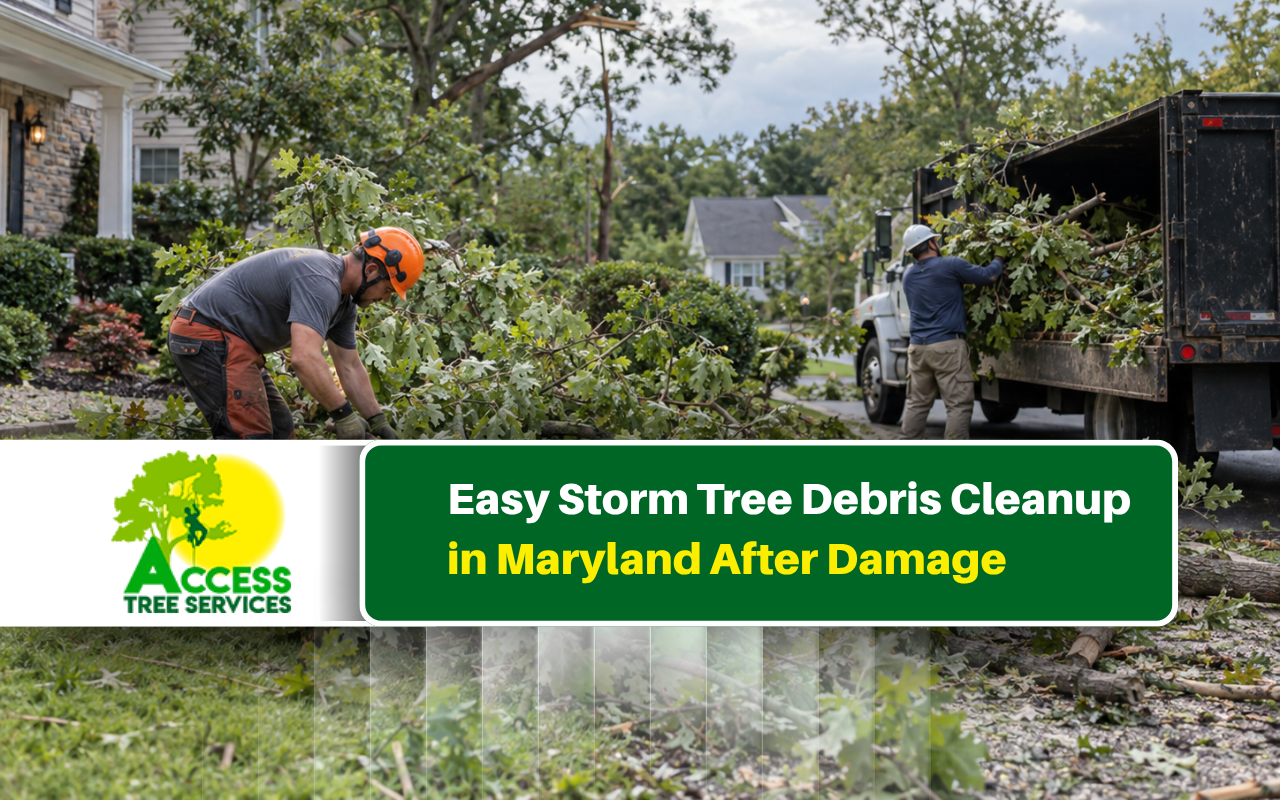
Storm tree debris cleanup in Maryland can feel difficult after strong winds, heavy rain, or falling limbs. A clear plan helps protect your family, yard, and property while making each cleanup step easier to manage.
At Access Tree Services LLC, we know storm damage can leave many hazards behind. Our team focuses on safe cleanup, careful removal, and practical guidance so homeowners can restore outdoor areas with less stress.
Start With A Careful Storm Damage Inspection
Before moving anything, walk around your property and look for broken limbs, leaning trees, damaged fences, and blocked paths. Stay away from hanging branches, unstable trunks, and any debris close to utility lines.
Storm tree debris cleanup should begin with the most serious hazards. Take photos before moving safe debris, especially when structures, fences, or vehicles have visible damage. These images can help you remember the original condition and organize the work. If a tree has split, shifted, or fallen near a structure, review our storm damage tree removal service for safer next steps.
Use Simple Safety Steps Before Cleanup Begins
Wear gloves, eye protection, sturdy boots, and long clothing before handling branches or rough debris. Keep children and pets away from the work area, and avoid cleanup during strong wind or active storms.
- Stay clear of downed power lines.
- Watch for loose branches overhead.
- Lift heavy pieces with help.
- Keep a first-aid kit nearby.
Choose The Right Tools For Safer Cleanup
Small branches can often be moved with loppers, hand saws, rakes, and garden carts. Larger limbs may need power tools, but only trained users should handle equipment such as chainsaws.
For dangerous or oversized debris, our team at Access Tree Services LLC can step in. Storm tree debris cleanup in Maryland often becomes more complex when several limbs overlap or block access. Clear space around safe work areas first, and keep tools away from wet or unstable ground. Our emergency tree removal options are useful when fallen branches or unstable trees create an immediate concern.
Sort Storm Debris For Faster Yard Recovery
Organizing debris before hauling makes post-storm yard cleanup easier. Place leaves and small twigs in one area, medium branches in another, and large wood pieces in a separate safe location.
- Group green waste for composting.
- Keep large logs separate.
- Remove damaged fencing from yard waste.
- Clear walkways before less urgent areas.
This simple system supports faster fallen branch cleanup and reduces repeated lifting. It also helps you decide what can be reused, recycled, chipped, or removed from the property.
Handle Heavy Branches Without Taking Extra Risks
Large limbs can be difficult to move because their weight is uneven. Cut only manageable pieces, use a cart when possible, and never stand under a branch that is still partly attached. Avoid dragging heavy wood across lawns, steps, or driveways where it may damage surfaces or cause a fall.
Storm tree debris cleanup in Maryland may require professional help when branches are tangled, very heavy, or resting on roofs, vehicles, or utility areas. In these situations, controlled removal is safer than pulling or cutting without a plan.
Plan Debris Hauling And Responsible Final Disposal
Storm debris hauling should be planned before piles become too large. Local yard-waste rules can vary, so check accepted materials, bundle sizes, and pickup requirements before placing debris near the curb. Keep piles away from drains, sidewalks, and street corners so water can flow and neighbors can pass safely.
- Compost leaves and small natural debris.
- Reuse wood chips in garden areas.
- Keep treated wood out of compost.
- Arrange hauling for large storm piles.
At Access Tree Services LLC, we can also help homeowners understand safe cleanup choices after major storms. Storm tree debris cleanup is easier when trees are prepared before severe weather arrives. For added preparation, read our wind season tree preparation guide.
Frequently Asked Questions
When should storm debris be removed?
Remove safe, loose debris as soon as conditions are calm. However, leave dangerous limbs or unstable trees for trained professionals.
Can I handle fallen branch cleanup myself?
Small branches may be manageable, but heavy, hanging, or tensioned limbs can shift quickly and cause injury.
What happens during post-storm yard cleanup?
Cleanup usually includes hazard checks, branch removal, sorting, hauling, and clearing walkways, lawns, and access areas.
Does insurance cover storm tree damage?
Coverage depends on your policy and the type of damage. Our Maryland tree insurance claims guide explains useful points to review.
When is professional cleanup the safer choice?
Professional help is best for large trees, roof damage, power-line hazards, unstable trunks, and heavy debris that cannot be moved safely.
Restore Your Yard With A Safer Cleanup Plan
Storm tree debris cleanup in Maryland becomes easier when safety, organization, and proper removal come first. A careful approach can protect your yard while reducing the risk of extra property damage.
When the work is too large or unsafe, contact us through our storm cleanup contact page. We can help with storm debris hauling, fallen limbs, and other cleanup needs after severe weather.