
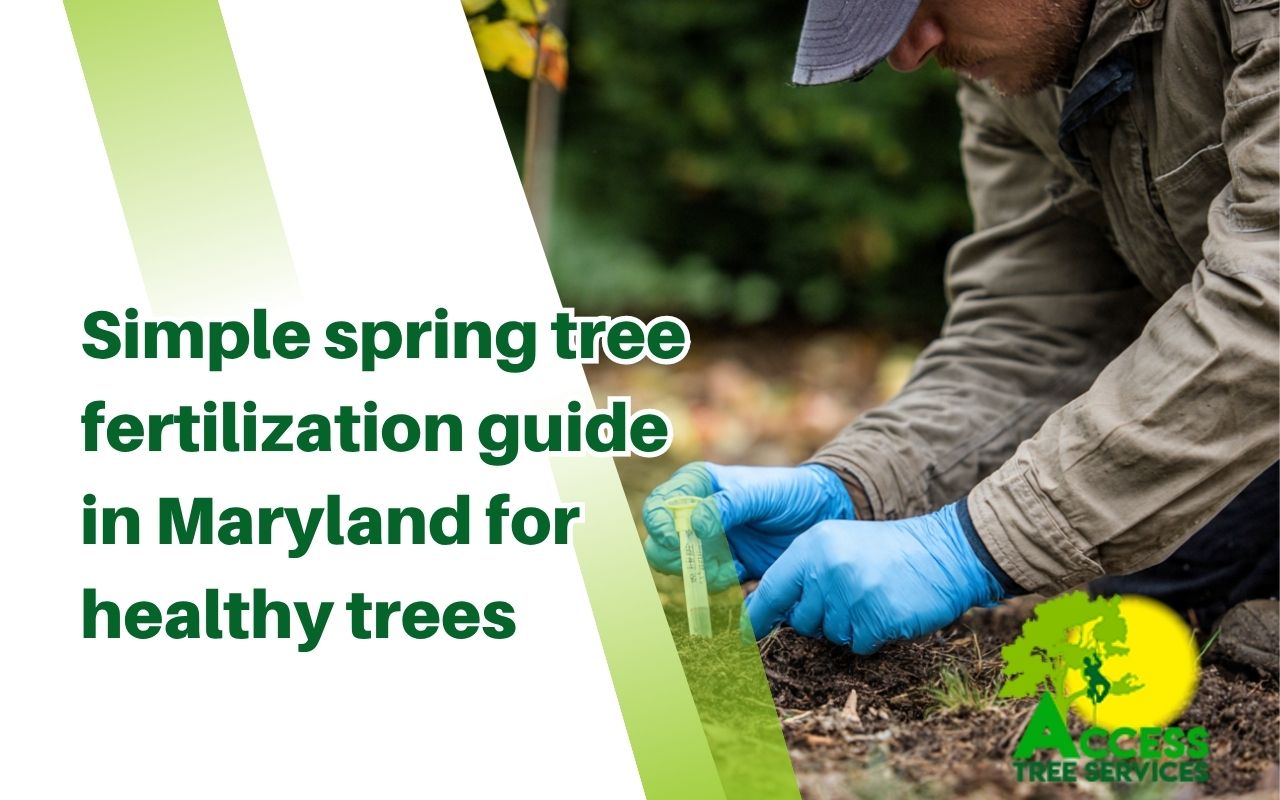
spring tree fertilization guide in Maryland helps homeowners support strong roots, fresh leaves, and steady growth in spring. Access Tree Services LLC knows each yard is different, so a smart plan starts with the right soil and the right timing.
This guide explains soil testing basics, fertilizer choices, and easy seasonal steps. As a result, you can build a professional tree care plan that keeps your landscape healthy and attractive.
Why spring tree fertilization guide in Maryland matters each year
In Maryland, trees wake up as days grow longer and warmer. Therefore, they need balanced nutrients to support leaves, roots, and branch strength. Access Tree Services LLC often sees weak growth when trees do not get the support they need early in the season.
Good spring feeding can also lower stress during summer heat and dry weather. In addition, a simple care routine may help trees stand up better to pests, disease, and storm damage.
- Supports new leaf growth and healthy color
- Helps roots grow deeper and stronger
- Improves branch strength before storm season
- Builds better resistance to stress and pests
Soil testing basics help trees get the right nutrients
This spring tree fertilization guide in Maryland starts with soil testing basics. A test shows soil pH and key nutrients like nitrogen, phosphorus, and potassium, so you do not need to guess.
Access Tree Services LLC recommends testing before adding fertilizer. That way, you can choose the right product, avoid waste, and reduce runoff into nearby water areas.
Easy ways to read soil test results at home
Clay and sandy soils act in different ways across Maryland. For example, clay may hold some nutrients too tightly, while sandy soil may lose them fast after rain.
Watch for yellow leaves, pale veins, weak shoots, or brown edges. These signs may point to low iron, magnesium, potassium, or nitrogen.
Choosing between slow-release vs quick-release fertilizer for spring trees
A good spring tree fertilization guide in Maryland also compares slow-release vs quick-release choices. Quick-release fertilizer works fast, but heavy rain can wash it away sooner.
Slow-release fertilizer feeds roots over a longer time. Because of that, many busy homeowners prefer it for simple and steady care.
- Quick-release works fast for urgent nutrient needs
- Slow-release feeds roots for weeks or months
- Blending both can give short-term and long-term support
- Rainfall and soil type should guide your choice
Best ways to apply fertilizer safely around tree root zones
Spread fertilizer under the drip line, which is the area below the outer branches. This is where many active roots grow, so nutrients can reach the right place more easily.
Do not pile fertilizer near the trunk. Instead, spread it evenly and water lightly after application. Access Tree Services LLC also suggests gloves and eye protection during the job.
Common signs of overfeeding and simple ways to prevent damage
Too much fertilizer may burn leaf tips, weaken new growth, or damage roots. In some cases, trees may wilt even when leaves still look green.
To avoid problems, follow test results and label directions closely. If needed, flush the soil with water and wait before feeding again.
Organic options and a professional tree care plan that lasts
Compost, aged manure, and bone meal can improve soil over time. Also, these options support helpful soil life and may reduce chemical runoff.
Access Tree Services LLC can build a professional tree care plan that fits your trees, soil, and yard goals. For broader seasonal help, review these tree care services from Access Tree Services LLC.
- Add compost around the drip line in spring
- Use dry organic products as directed on the label
- Pair feeding with mulch for better moisture control
- Adjust the plan as soil and weather conditions change
Frequently Asked Questions
When should I fertilize trees in spring in Maryland?
Early spring is often best, especially when buds start to swell. This spring tree fertilization guide in Maryland works best when feeding matches the tree’s natural growth cycle.
Is soil testing really needed before fertilizing my trees?
Yes, because a soil test helps you choose the right nutrients and rate. As a result, you avoid overfeeding and save money.
Which is better for my yard, slow-release or quick-release fertilizer?
It depends on your goal. Quick-release helps with fast correction, while slow-release is better for steady care over time.
Can organic fertilizer work as part of tree care?
Yes, organic products can improve soil health and support roots. However, they may act more slowly than some synthetic products.
When should I call a professional for tree care help?
If your trees show poor growth, yellow leaves, dieback, or storm damage, expert help is useful. You can also contact Access Tree Services LLC for local tree care help to discuss your yard.
Simple spring steps to keep Maryland trees healthy and strong
Follow this spring tree fertilization guide in Maryland with soil testing, proper feeding, and careful timing. Then your trees can grow with stronger roots, fuller leaves, and better resilience through the season.
Access Tree Services LLC also reminds homeowners that full tree health may include pruning or removal when a tree is unsafe. Learn about tree removal in Bowie MD for unsafe or damaged trees or tree removal in Baltimore MD for high-risk tree problems when a tree can no longer recover.