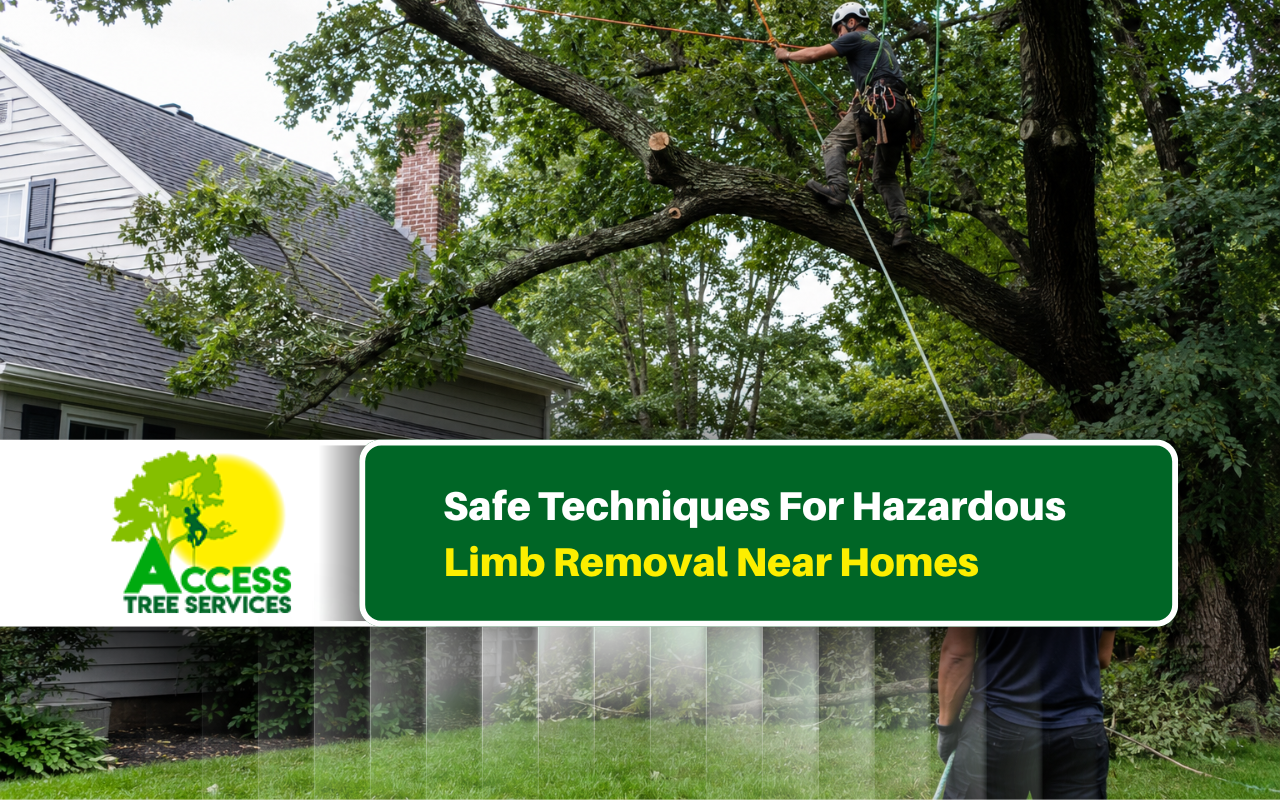
Hazardous limb removal protects your home, family, and outdoor spaces from weak branches that may fall without warning. A heavy limb above a driveway, roof, walkway, or play area can become a serious danger during wind, rain, or daily use.
At Access Tree Services LLC, we help property owners spot risks early and choose safe next steps. In Annapolis, MD, storms and high winds can make weak limbs more dangerous, so regular tree care should stay on your home safety list.
Common Warning Signs Of Weak Tree Limbs
Start by looking for cracks, splits, or peeling bark along each limb. These signs can mean the wood is weak inside. Dead branches may look dry, brittle, or darker than healthy growth, and some may show fungus or soft spots.
- Cracks running along the branch
- Loose bark or open holes in the wood
- Dead limbs above busy areas
- Branches rubbing against each other
Also, check where the limb joins the trunk. A tight joint with bark trapped inside can split more easily. For more signs of serious tree risk, visit our guide on when a tree may need removal.
Why Unstable Branches Can Become Serious Hazards
Weak limbs can fall during storms, heavy rain, snow, or even light pressure. As a result, people, pets, cars, roofs, fences, and power lines may be at risk. This is why hazardous limb removal should never be delayed when warning signs appear.
Falling branches can also create repair costs and possible issues with nearby properties. When limbs hang over sidewalks, driveways, or a neighbor’s yard, quick action matters. Our team at Access Tree Services LLC can explain safe options before the risk grows.
Essential Tools And Gear For Safer Tree Work
Safe work starts with the right tools. A pruning saw, pole pruner, chainsaw, ladder, rope, and pruning shears can help with smaller jobs. However, each tool must be sharp, clean, and suited to the limb size.
- Hard hat for head protection
- Safety glasses for flying wood chips
- Work gloves for better grip
- Non-slip boots for uneven ground
A hazardous limb removal service uses cutting tools, safety gear, and control methods together. Therefore, larger or higher branches need more than basic yard tools. For storm-related risks, our emergency tree care guidance can help you understand urgent steps.
Controlled Cutting Methods That Help Prevent Damage
Before cutting, clear the area under the branch and plan a safe path away from the tree. Then, make a small cut under the limb before cutting from the top. This helps stop bark from tearing and keeps the removal cleaner.
For larger limbs, cut in smaller sections instead of removing everything at once. Ropes can help lower pieces with more control. During hazardous limb removal in Annapolis, MD, never stand under the branch, and avoid cutting when the limb may swing toward you.
Tree Types Need Different Limb Removal Care
Different trees react in different ways. Oak and maple branches are heavy and need slow cuts. Pine and fir branches can snap suddenly. Fruit tree limbs are often smaller, but they may break if handled with too much force.
Because of this, hazardous tree limb removal in Annapolis, MD should match the tree’s shape, strength, and location. Careful trimming can also reduce future limb stress. Our tree pruning techniques explain how proper cuts support healthier growth.
When Professional Limb Removal Becomes The Safer Choice
Some branches are too dangerous for do-it-yourself work. If a limb hangs near power lines, leans over a roof, or sits high in the canopy, professional help is the safer choice. Emergency limb removal may also be needed after strong storms.
- Large limbs above homes or vehicles
- Branches touching or near power lines
- Storm-damaged limbs under pressure
- Trees with major cracks or heavy leaning
With Access Tree Services LLC, you can ask for clear guidance before work begins. A trained crew has the equipment needed for safe lowering, careful cutting, and cleanup. For regular care, our tree trimming service information can also help.
Frequently Asked Questions
How Do I Know A Limb Is Dangerous?
A limb may be dangerous if it has cracks, dead wood, fungus, peeling bark, or a weak joint. Also, any branch hanging over a roof, walkway, driveway, or play area should be checked soon.
Can I Cut A Hazardous Limb Myself?
Small low branches may be safe with the right tools and gear. However, large, high, cracked, or storm-damaged limbs should be handled by professionals because they can fall or swing without warning.
When Is Emergency Limb Removal Needed?
Emergency limb removal in Annapolis, MD is needed when a branch may fall soon, blocks access, touches a structure, or hangs after a storm. In these cases, fast action can reduce damage and protect people nearby.
Why Is Safety Gear So Important?
Safety gear protects you from falling wood, flying chips, tool slips, and unstable ground. A hard hat, gloves, glasses, and strong boots can lower the chance of injury during tree work.
Do Weak Limbs Come Back After Removal?
New weak limbs can form if a tree is not cared for over time. Regular checks, light pruning, proper watering, and healthy soil can help reduce future problems and support stronger growth.
Plan Safer Trees With Skilled Local Support
Preventive care can reduce the need for hazardous limb removal later. Regular checks after storms, light pruning, and early removal of weak branches help protect your property. Mulch and proper watering also support stronger roots and better tree balance.
When customers contact Access Tree Services LLC, we explain the safest next step with care and honesty. For help with hazardous tree limb removal in Annapolis, MD, use our contact page to get in touch with our team.