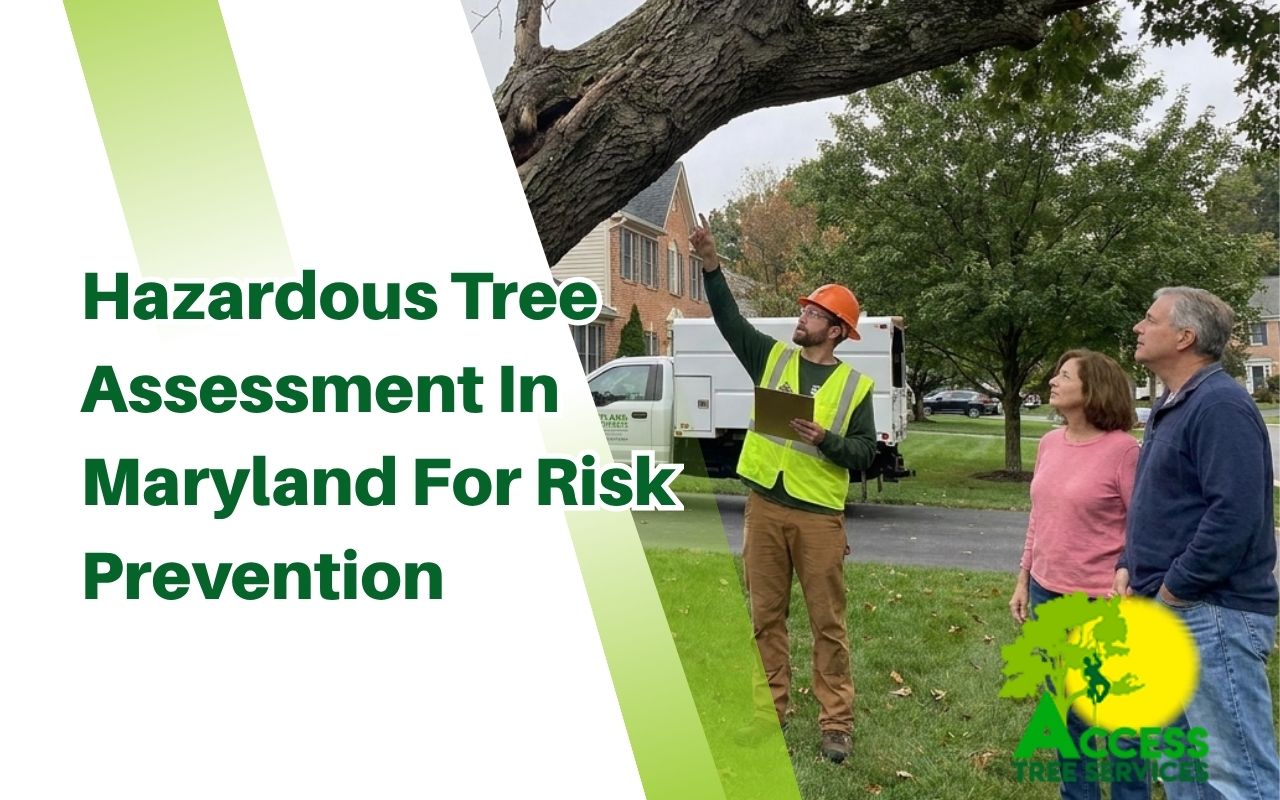
Hazardous tree assessment in Maryland helps protect homes, yards, streets, and people before damage happens. Trees add shade and beauty, yet weak roots, dead limbs, and hidden decay can turn them into serious risks.
At Access Tree Services LLC, we help property owners notice early warning signs and choose safe next steps. With regular care, trees can stay healthy while your property remains safer through changing Maryland weather.
Why Safe Trees Matter Across Maryland Homes Today
Maryland weather can change quickly. Heavy rain, strong wind, snow, and soft soil can weaken trees over time. Therefore, a tree that looked stable last season may become unsafe after repeated storms.
Hazardous tree assessment in Maryland gives homeowners a clear look at possible danger. Instead of waiting for branches to fall, a review helps find cracks, decay, leaning trunks, and root problems before they cause harm.
Common Tree Hazards Maryland Property Owners Should Notice
Many tree risks begin slowly. However, they often become clear after bad weather or long periods of wet soil. A Maryland hazardous tree assessment can help connect visible problems with hidden causes.
- Storm damage that leaves cracked limbs or split trunks.
- Root decay caused by poor drainage or constant moisture.
- Weak branches growing over roofs, cars, or walkways.
- Construction damage near roots, bark, or lower trunks.
Some tree species also have shallow roots or soft wood. As a result, they may need closer attention near homes, driveways, fences, and power lines.
Warning Signs That Call For Prompt Tree Checks
A hazardous tree inspection should include the canopy, trunk, roots, and nearby soil. Small changes can show that a tree is losing strength, especially after storms or long rainy periods.
- Large dead branches hanging in the upper crown.
- Fresh cracks, open wounds, or deep trunk splits.
- Mushrooms or soft wood near the tree base.
- Leaning that seems new or keeps getting worse.
For more warning signs, our guide on tree removal warning signs explains what homeowners should watch closely.
How Professional Tree Risk Reviews Support Safer Decisions
Hazardous tree assessment in Maryland is not only about removing trees. It is about deciding whether pruning, support, treatment, or removal is the safest choice for the property.
During a hazardous tree evaluation, trained professionals look at tree health, structure, location, and possible targets. We use this information to help you make practical decisions without guessing.
Simple Steps That Lower Tree Safety Risks Early
Early action often prevents larger problems. Therefore, basic tree care can reduce falling limbs, improve balance, and support stronger roots before severe weather arrives.
- Remove dead, broken, or weak branches when noticed.
- Keep mulch away from direct trunk contact.
- Avoid cutting roots during home or yard projects.
- Schedule reviews after major storms or visible changes.
When a tree may already be unsafe, our emergency tree removal support can help address urgent hazards with safer methods.
When Expert Support Becomes The Safer Local Choice
Some trees are too large, unstable, or close to structures for a simple homeowner check. In these cases, expert help lowers the chance of injury, property damage, and poor decisions.
At Access Tree Services LLC, we can review risky trees and recommend safe options. For trees that cannot be saved, our professional removal service explains how careful removal protects nearby areas.
Frequently Asked Questions
What makes a tree hazardous?
A tree may be hazardous when decay, cracks, dead limbs, weak roots, or a strong lean make failure more likely. Location also matters because branches near homes, cars, or paths create greater risk.
How often should trees be inspected?
Most properties benefit from a yearly review. However, trees should also be checked after strong storms, heavy rain, soil movement, or sudden changes in the trunk, roots, or canopy.
Can every risky tree be saved?
Not always. Some trees can be pruned, supported, or treated. However, severe decay, major root loss, or dangerous leaning may make removal the safest option.
Is hazardous tree assessment in Maryland needed after storms?
Yes. Storms can create hidden cracks, loosen roots, and leave branches hanging high in the canopy. A careful review helps find damage before another storm makes it worse.
What should I do if a tree looks unsafe?
Stay away from the tree and avoid cutting large limbs yourself. Then contact a trained team for guidance, especially if the tree is near a structure, wire, road, or walkway.
Plan Ahead For Stronger Trees And Safer Spaces
Hazardous tree assessment in Maryland helps you plan before problems become emergencies. With steady care, clear advice, and timely action, trees can remain a safe and valuable part of your outdoor space.
We protect your property with practical tree care. For questions or service requests, stop by our contact page and tell us what you are seeing.